





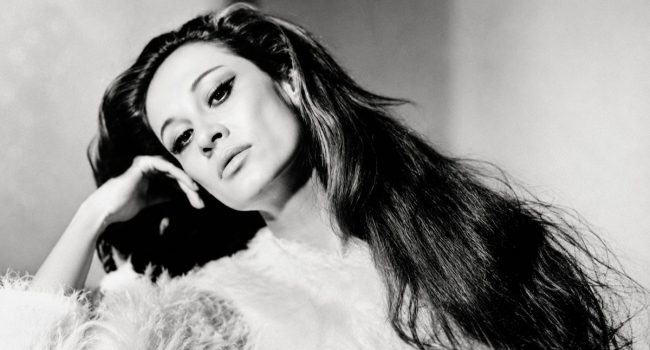
Olivera Katarina, actress and singer who has marked Serbian and Yugoslav cinematography as well as the music scene of the second half of the 20th century, passed away on July 21st 2026 at the age of 87.
Born in Belgrade on March 5th 1940 as Olivera Petrović, she took the stage name Katarina after her mother. After briefly studying law, she opted for acting and entered the Theater Academy in Belgrade, where she was in the class of professor Ognjenka Milićević together with Petar Kralj, Milena Dravić, Stanislava Pešić and Branka Zorić. As early as 1962, she became a permanent cast member at the National Theater in Belgrade, where she performed one of her first notable roles in the play “Koštana”. Soon after, first film appearances followed, soon launching her into stardom, making her one of the most recognizable faces of Yugoslav film during the 1960s.
She made her film debut in 1964 in the film Dobra kob, and during her rich career she achieved notable roles in the films Soldier (1966), I Even Met Happy Gypsies (1967), Rat’s Awakening (1967), Morning (1967), Hasanaginica (1967), God’s Scourge (1969), Goya or the Hard Way of Knowing (1971) and Tears for Sale (2008), a film in which she returned to the big screen after a long break. She collaborated with the most prominent Serbian authors, including Aleksandar Petrović, Puriša Đorđević, Soja Jovanović, Mića Popović and Đorđe Kadijević, as well as with numerous notable foreign directors.
Her most famous film creation remains the role of Lenča in the cult production I Even Met Happy Gypsies by Aleksandar Petrović. The film won the Grand Jury Prize at the Cannes Film Festival and was nominated for an Oscar, becoming one of the most significant works of Serbian and Yugoslav cinematography, while it brought Olivera Katarina international recognition and placed her among the most prominent European film actresses of her time.
In addition to her film career, Olivera Katarina achieved exceptional international success as a singer. She performed on the most prestigious world stages, among which the Paris “Olympia” occupies a special place, and her interpretations of traditional songs, romances and chansons remain a permanent part of the local musical heritage. Her international success was accompanied by numerous recognitions from public and critics. The New York Times called her “the new Anna Magnani”, while the French press wrote that “she is on par with Brigitte Bardot”.
She wrote the autobiography “Aristocratic Foot”, in which she described her life and artistic journey. For her contribution to film, theater and music, she received numerous domestic and international awards, including the Golden Seal of the Yugoslav Cinematheque for her outstanding contribution to film and the Nušić Lifetime Achievement Award for her theatre work.
With her striking film roles, unique artistic appearance and authentic expression, Olivera Katarina left an indelible mark in the history of Serbian cinema and culture.
Photo/Private archive